The Hyundai Tucson: A Compact SUV That Punches Above Its Weight
The Hyundai Tucson has long been a standout in the crowded compact SUV segment, blending affordability, versatility, and modern tech into a package that’s appealing for families, commuters, and adventure seekers alike. Since its debut over two decades ago, the Tucson has evolved from a modest crossover into a global bestseller, with more than 7 million units sold worldwide. Named after the Arizona city, it embodies a spirit of rugged exploration while delivering everyday practicality.
As we look at the latest iterations—particularly the refreshed models rolling out around 2025-2026—the Tucson continues to impress with its bold styling, efficient powertrains, and feature-packed interior. Whether you’re eyeing the gas, hybrid, or plug-in hybrid versions, this SUV offers something for everyone in a market dominated by rivals like the Honda CR-V, Toyota RAV4, and Ford Escape.
A Brief History: From Humble Beginnings to Global Icon
The Hyundai Tucson’s story begins in 2004, when it launched as a 2005 model year vehicle in the U.S. and other markets. Built on the same platform as the Hyundai Elantra sedan, the first generation (2005-2009) was designed to compete in the burgeoning compact SUV class against established players like the Ford Escape and Honda CR-V.
It featured a practical, car-like driving experience with available all-wheel drive, making it an accessible entry point for buyers seeking more space than a sedan but without the bulk of larger SUVs. Early models came with a 2.0-liter four-cylinder or a punchier 2.7-liter V6, though fuel efficiency wasn’t its strong suit by today’s standards.
The second generation (2010-2015) marked a significant leap forward, introducing a more streamlined design and improved interior quality. Hyundai focused on refinement, adding features like Bluetooth connectivity and better safety tech. This era saw the Tucson gain traction in Europe and Asia, solidifying its global appeal.
By the third generation (2016-2021), the Tucson had matured into a tech-savvy contender. It adopted Hyundai’s “Fluidic Sculpture” design language, with sharper lines and a more premium feel. Engine options expanded to include turbocharged variants, and hybrid models began appearing in select markets. Safety became a priority, with features like automatic emergency braking earning high marks.
The current fourth generation, introduced for the 2022 model year, represents the Tucson’s boldest evolution yet. It features a futuristic aesthetic with parametric jewel-like patterns in the grille and lighting. This generation emphasizes electrification, with hybrid and plug-in hybrid options joining the lineup. Celebrating its 20th anniversary in 2024, the Tucson has become Hyundai’s best-selling model, thanks to continuous innovations in design, performance, and connectivity.
Exterior Design: Bold and Adventurous
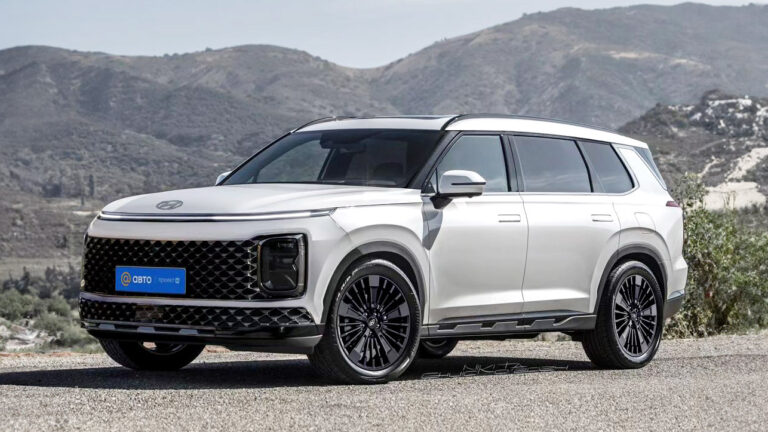
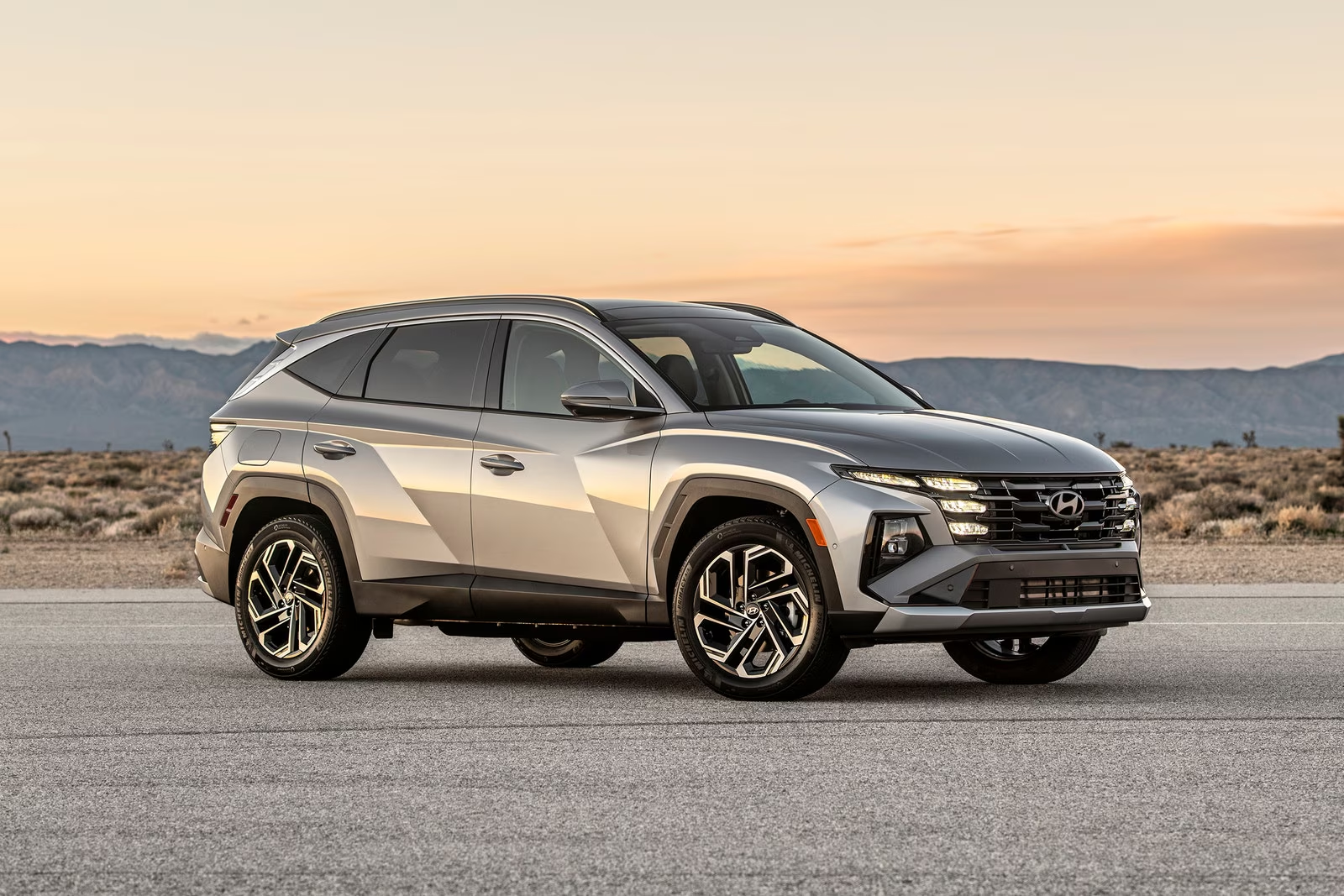
The latest Tucson models, including the 2026 refresh, sport a “bold face with uptown style” that’s hard to ignore. The front fascia features a wide grille integrated with LED daytime running lights, creating a seamless, high-tech look. Higher trims like the XRT add rugged elements such as black cladding, 18-inch alloy wheels, and off-road-inspired bumpers for a more adventurous vibe. Overall dimensions remain compact—about 182 inches long—making it easy to maneuver in urban settings while offering ample ground clearance for light trails.
Available in gas, hybrid, and plug-in hybrid forms, the exterior design accommodates aerodynamic tweaks for better efficiency without sacrificing presence. Wheel sizes range up to 19 inches, and options like a panoramic sunroof enhance the open-air feel.
Interior Comfort and Technology: A Step Up in Sophistication
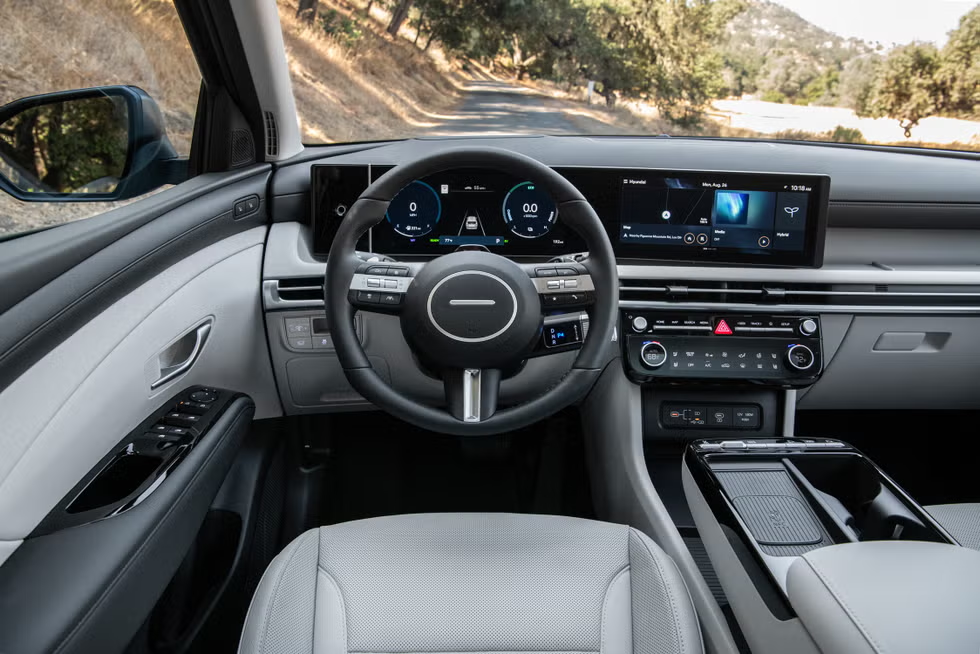
Step inside the Tucson, and you’re greeted by a surprisingly upscale cabin that rivals more expensive SUVs. The 2026 model boasts up to 74.8 cubic feet of cargo space with the rear seats folded, thanks to a 60/40 split and dual-level floor. Seating is comfortable, with available H-Tex or leather-trimmed options, and higher trims like the Limited offer heated and ventilated front seats.
Tech is a highlight: A standard 12.3-inch touchscreen handles infotainment with wireless Apple CarPlay and Android Auto. Select models feature a panoramic curved display combining the infotainment screen with a digital instrument cluster for a seamless interface.
Other goodies include wireless charging with a cooling fan, Hyundai Digital Key 2 for phone-based access, and Bluelink+ for remote start and climate control. Audio enthusiasts will appreciate the available Bose premium system, especially in N Line hybrids.
Owners rave about the spacious, quiet interior—many describe it as feeling almost luxurious, with comfortable seats and good sound insulation. However, some note that the steering can feel loose, and it’s not the sportiest handler in its class.
Performance and Efficiency: Options for Every Driver
Under the hood, the Tucson offers versatility across its powertrains. The base gas model uses a 187-hp 2.5L four-cylinder engine, delivering smooth performance with fuel economy up to 28 mpg combined (FWD). All-wheel drive is available across the board via Hyundai’s HTRAC system, which smartly distributes power for better traction.
For eco-conscious buyers, the hybrid combines a 1.6L turbo engine with electric motors for 231 hp total, achieving up to 38 mpg combined. The plug-in hybrid ups the ante to 268 hp, with a 32-mile all-electric range and 35 mpg combined when using gas. Both electrified variants provide a quiet, refined ride, though they’re not built for high-speed thrills—handling is competent but not exhilarating.
Real-world owners report a comfortable, easy-going drive, praising the suspension for soaking up bumps without drama. On X (formerly Twitter), users like those sharing experiences highlight its reliability, though some older models had transmission issues.
Safety Features: Top-Tier Protection
Hyundai’s SmartSense suite comes standard, including forward collision avoidance, lane-keeping assist, blind-spot warning, and rear cross-traffic alert. Higher trims add advanced features like highway driving assist, surround-view cameras, and remote smart parking. The Tucson consistently earns high safety ratings, making it a solid choice for families.
Pricing and Trims: Value-Packed Choices
Starting at around $29,200 for the gas SE trim, the Tucson undercuts many competitors while offering more standard features. Hybrids begin at $33,465 (Blue trim), and plug-in hybrids at $39,730 (SEL). Top-end Limited models push toward $47,440 but include luxuries like leather seats and premium audio. With a strong warranty—5 years/60,000 miles basic and 10 years/100,000 miles powertrain—it’s a smart long-term buy.
| Trim Level | Powertrain | Starting Price | Key Features |
|---|---|---|---|
| SE | Gas | $29,200 | 12.3″ touchscreen, wireless CarPlay/Android Auto, basic safety suite |
| SEL Premium | Gas | $33,550 | Panoramic sunroof, digital cluster, heated seats |
| Blue | Hybrid | $33,465 | 38 mpg combined, HTRAC AWD available |
| N Line | Hybrid | $38,215 | Sporty styling, Bose audio, 19″ wheels |
| Limited | Plug-in Hybrid | $47,440 | Leather seats, surround-view monitor, remote parking assist |
Pros and Cons: What Owners and Critics Say
Pros:
- Spacious and comfortable interior with luxury-like quietness.
- Excellent fuel economy in hybrids, especially for city driving.
- Packed with tech and safety features at a competitive price.
- Bold design that stands out.
- Smooth ride and versatile cargo space.
Cons:
- Not the most engaging to drive; steering feels vague.
- Base engine lacks punch compared to turbo rivals.
- Some sensors can be overly sensitive.
- Higher trims can get pricey, approaching mid-size SUV territory.
Critics like those from Edmunds and MotorWeek praise its value and comfort, noting it’s “surprisingly lovable” for daily use. Owners on platforms like Reddit echo this, appreciating the upgrade from competitors like the Honda CR-V.
Final Thoughts: Why the Tucson Deserves Your Attention
In a sea of compact SUVs, the Hyundai Tucson distinguishes itself with a winning combination of style, efficiency, and innovation. Its evolution over four generations reflects Hyundai’s commitment to pushing boundaries, from early practicality to today’s electrified prowess. If you’re shopping for a versatile daily driver that doesn’t skimp on features or comfort, the Tucson is a compelling option—especially with its strong value proposition and warranty. Test drive one, and you might just find it’s the perfect blend of fun and function for your next adventure.