

Can America’s Golden Generation Finally Deliver at Their Own World Cup?
INGLEWOOD, Calif. — On the eve of the 2026 FIFA World Cup, the United States men’s national team stands at a crossroads. After missing the 2018 tournament in Russia entirely, American soccer got a massive lifeline when FIFA awarded the 2026 hosting rights to the U.S., Canada, and Mexico. Eight years later, the pressure is on: this is the first time the U.S. has hosted the men’s World Cup in over three decades, and falling flat on home soil simply isn’t an option.
That’s why the federation went all-in on youth. They phased out the old guard and invested heavily in a wave of talented young Americans playing in Europe’s top leagues. Christian Pulisic, the breakout star from Borussia Dortmund, quickly became the poster boy for what everyone started calling America’s “Golden Generation.”
Now the moment of truth has arrived. On Friday, the U.S. opens its campaign against Paraguay at SoFi Stadium in Inglewood, right in the heart of Southern California. For players like midfielder Cristian Roldan, who grew up nearby, it’s the kind of childhood dream that hits different on home turf.
From Qatar Disappointment to Hard-Earned Experience
The foundation for this team was laid after the 2018 disaster. Under then-coach Gregg Berhalter, the U.S. went extremely young during 2022 World Cup qualifying — the squad’s average age was just 24.1, the youngest of any team that made it to Qatar.
They showed real flashes in that tournament: a gritty scoreless draw against England and a gutsy 1-0 win over Iran that sent them through to the knockout round. But inexperience showed in a tough 3-1 loss to the Netherlands. It was progress, sure, but not the breakthrough fans had hoped for.
Fast forward to 2026, and those same players are no longer kids. The current roster carries over 13 players from Qatar — matching a U.S. record — and features a more mature average age of nearly 27, with over 500 combined international caps. Stars like Pulisic, Tim Weah, Haji Wright, and Gio Reyna now bring valuable experience and leadership.
“We’re all older, we’ve grown as people and as players,” Reyna noted recently. That extra seasoning could be the difference this time around.
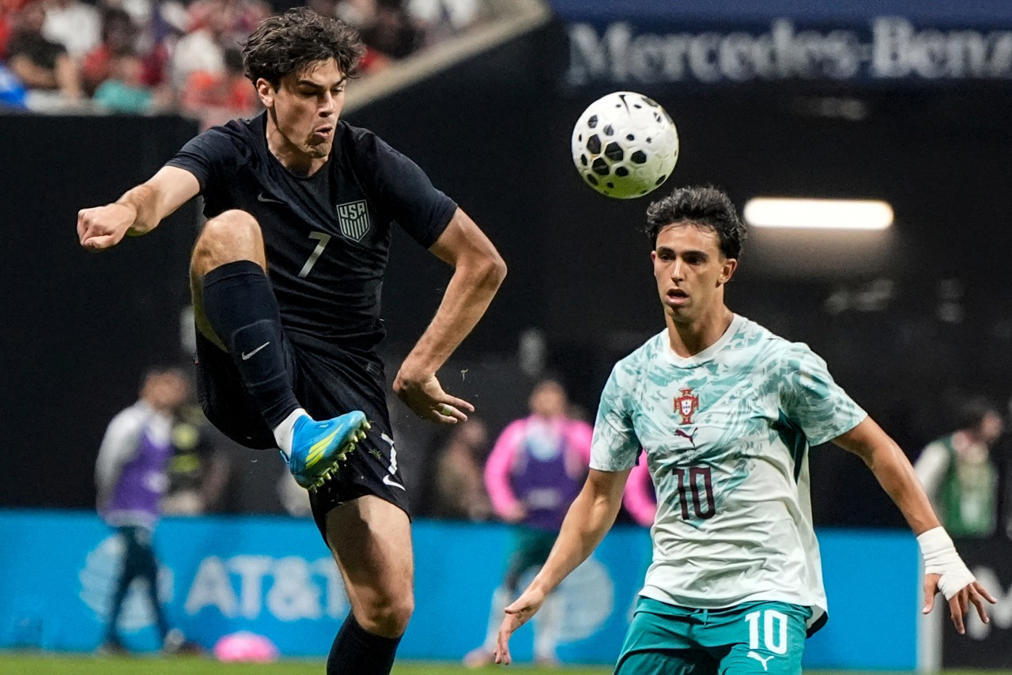
The Copa America Wake-Up Call
It hasn’t been a smooth ride. The low point came during the 2024 Copa America, which the U.S. hosted. After early exits following defeats to Panama and Uruguay, Berhalter was let go, and Argentine manager Mauricio Pochettino was brought in to steady the ship.
For a while, it looked like this group might join the long list of hyped “Golden Generations” that never quite panned out — think England in the early 2000s or Portugal around the same time.
But recent results have sparked fresh hope. The team showed fight in a 3-2 victory over Senegal, with Pulisic ending a scoring drought. Then they went toe-to-toe with powerhouse Germany, pushing them hard before falling 2-1.
High Stakes, Even Higher Expectations
As the tournament kicks off, Pochettino is setting the bar sky-high. He wants his players to play with the joy and fearlessness of kids, free from the weight of the occasion. At the same time, he’s made it clear that anything short of reaching the final — and winning the whole thing at MetLife Stadium — won’t feel like success.
For American soccer fans, this World Cup represents more than just games. It’s a chance for a talented, battle-tested group to finally shed the “what if” label and deliver on years of promise. With home crowds behind them and a deep roster, the U.S. has everything it needs to make a serious run.
The golden generation has grown up. Now it’s time to find out if they can avoid the curse and write a new chapter in U.S. soccer history.